
Adelia de Padova – Being, Matter, and Vibration
Interview by Rodica Georgescu
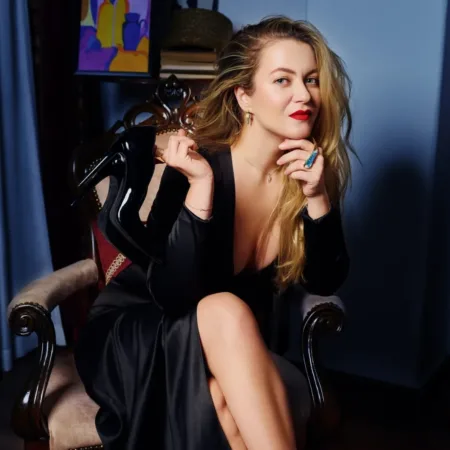
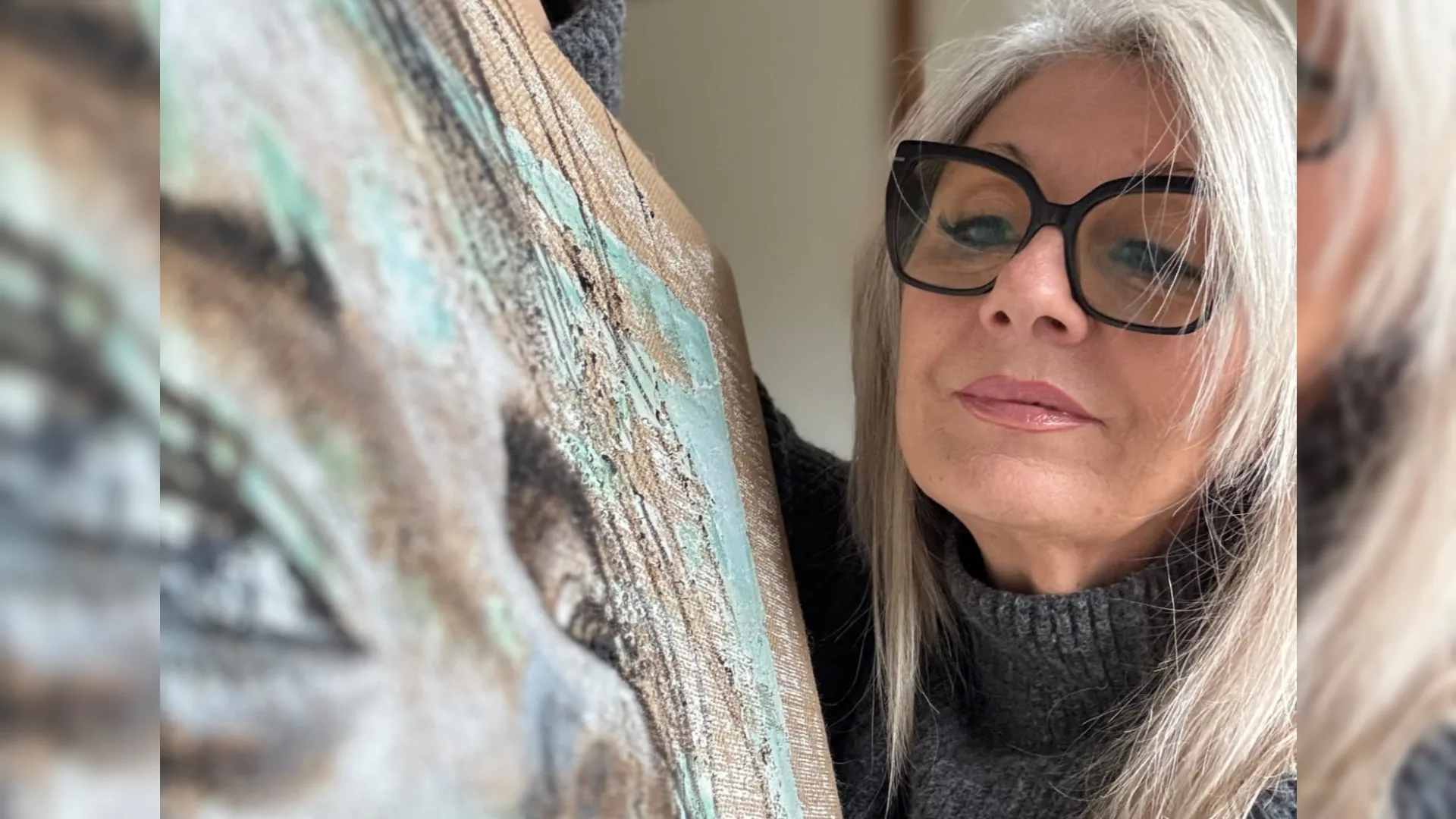
In a world where haste overshadows depth, Adelia de Padova invites us to slow down. Her canvases are not mere art objects but fragile mirrors of the human soul. Born in Italy, with creative roots deeply anchored in her childhood, Adelia chose to tell her story not through words, but through painterly gestures that seem to unravel the very fabric of reality.Her works are silences that speak, vibrations that touch the unseen. And perhaps it is this very strength of vulnerability that naturally led to the meeting between the Italian artist and the intimate, soulful space of Galerie Mystique in Ploiești — a place where sensitivity, storytelling, and aesthetics come together without a mask.In the lines that follow, I invite you to discover the thoughts, emotions, and path of an artist who creates not only art — but healing
1. How did your journey into the world of art begin, and what role did your family play in that process?
1. My journey into the world of art began quite naturally. Since I was little, I had a strong attraction to drawing and painting. My family always supported this passion, even though they didn’t come from an artistic background. My father, though not an artist, passed on to me the value of creativity, while my mother always encouraged me to follow my inclinations. Their support, even practically, like taking me to exhibitions or helping with materials, was fundamental in my path.
2. You followed a rather unconventional artistic path. How has that shaped your style and creative expression?
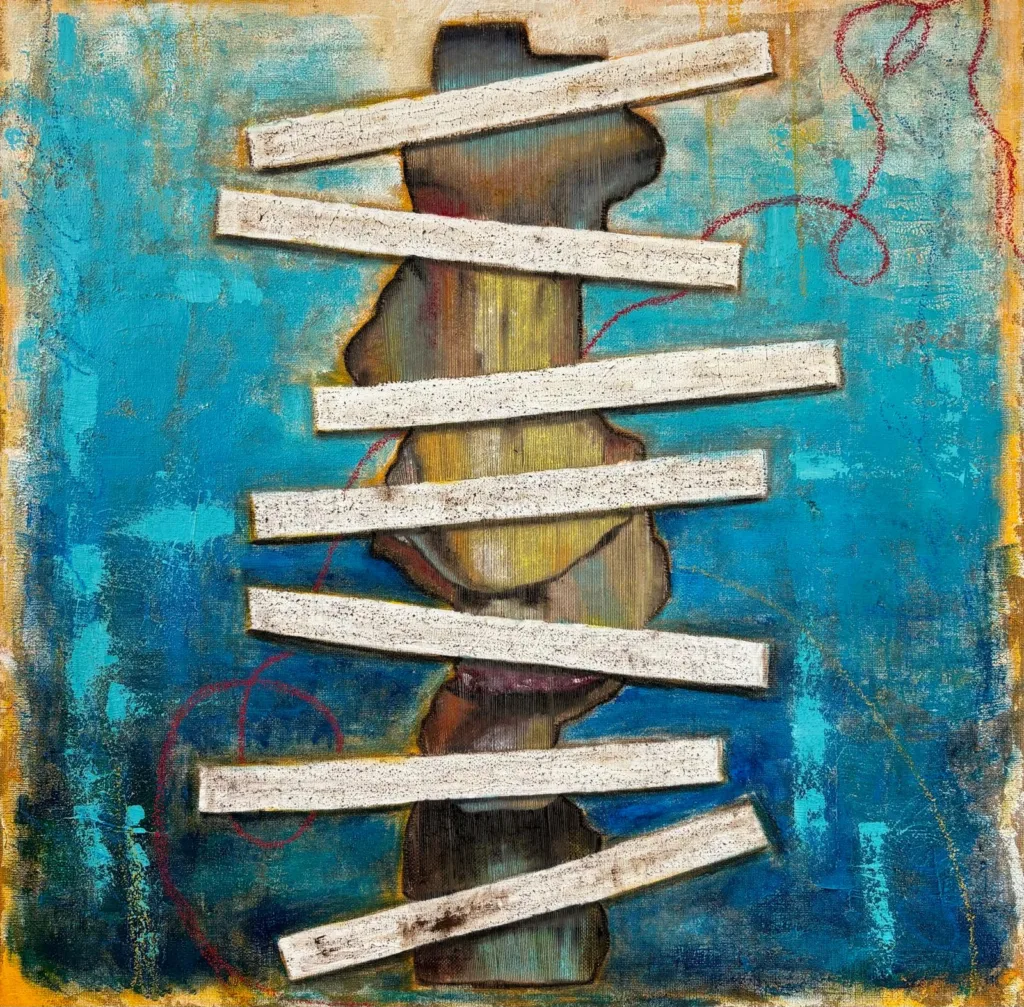
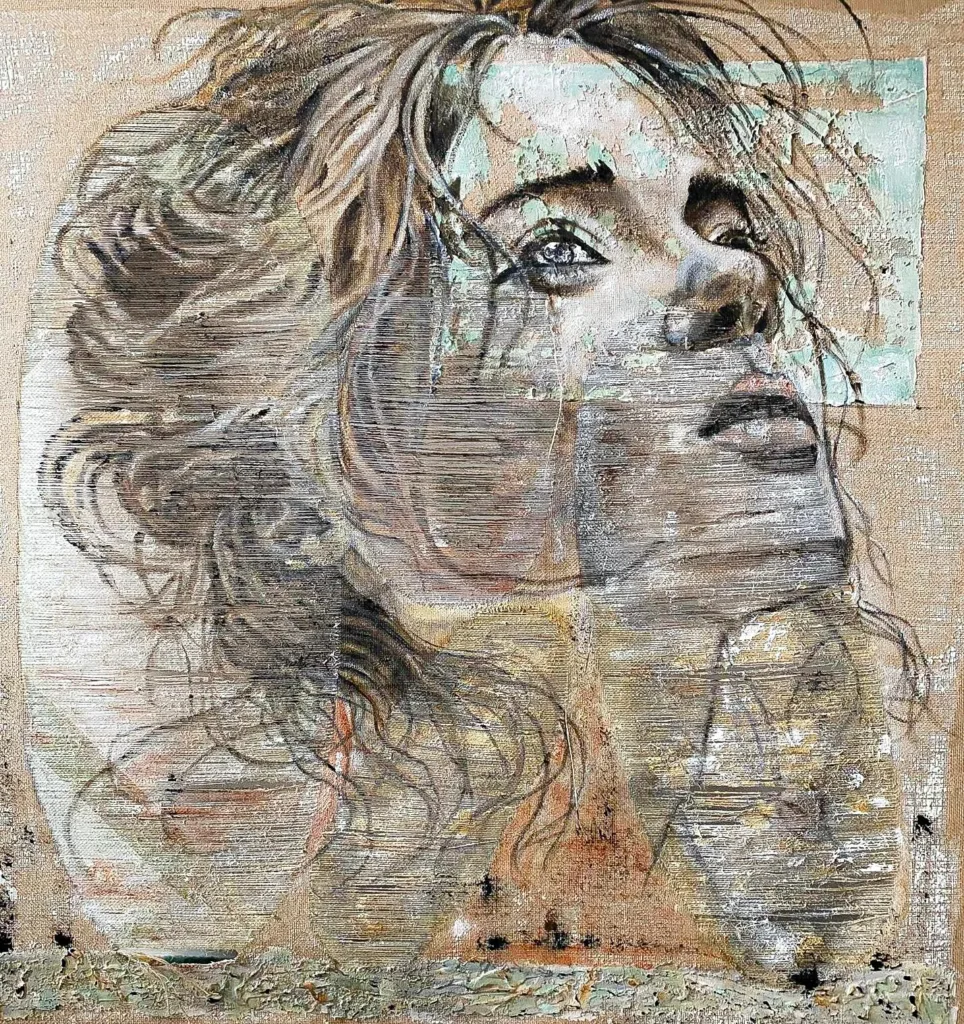
2. My artistic path hasn’t been linear, but this is exactly what has deeply influenced my style. I’ve had the time to explore different techniques, without the pressure to adhere to a norm or trend. This allowed me to develop a personal language that combines introspection with experimentation. The freedom to explore led me to discover an artistic language that blends the figurative with the abstract.
3. What does the gesture of “unweaving the canvas” symbolize for you? Is it purely artistic, or does it carry a spiritual dimension as well?
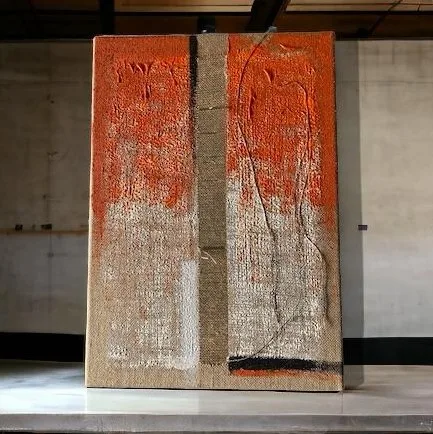
3. Unraveling the canvas is a gesture that represents an act of liberation for me. It’s not just a technical action but also a symbol of detachment from what is conventional. It’s as if, by tearing apart the weave of the canvas, I’m also tearing away the mental structures that bind me to a singular vision of the world. It definitely has a spiritual dimension as well, an invitation to look beyond appearances and dig deep.
4. What is the source of the vulnerability you explore so deeply in your works? Is it a response to a chaotic world or a dialogue with the self?
4. The vulnerability in my works comes from a dialogue with myself, though I can’t deny that the external world has a strong influence on it. The chaos of the world, loneliness, and the difficulty of communication are all themes that emerge in my work. It’s as if I’m trying to find a refuge, but at the same time confronting a reality that often escapes me. My art becomes a reflection of what troubles me, a way to communicate with the most intimate part of myself.
5. How do you maintain a balance between introspection and visual communication in your art?
5. I find that the balance comes from the creation process itself. I never start with a too-defined idea; I let the work evolve as I create it. Introspection is the foundation, but it’s the visibility of the artwork that makes it communicative. Each of my works is a reflection that becomes visible, and its final form is an encounter between my personal experience and that of the viewer.
6. How do you perceive the audience’s reaction to your works? Have any interpretations ever surprised you?
6. I see the audience’s reaction as an essential part of the artistic process. I’m always intrigued by how people approach my work—what they see, what they feel. I’ve often heard interpretations I hadn’t anticipated, and yet I find them enlightening. Some viewers have perceived meanings I hadn’t consciously considered, as if the artwork spoke directly to them in a personal language. This confirms to me that, once shared, art no longer belongs solely to the artist—it becomes something alive, constantly evolving.
7. You’re currently collaborating with Galerie Mystique in Ploiești. How did this artistic connection come about, and what drew you to their vision and space?
7. My collaboration with Galerie Mystique in Ploiești came about thanks to an artist and travel companion, Cristiana Giacchetti, who sent me the gallery’s open calls. I immediately felt a strong connection with their artistic vision, which is open to different forms of art and supports emerging artists. The gallery provides a space that not only expresses beauty but also allows for a deep dialogue between the artworks and the audience. It is a place that fosters authenticity, which is very important to me. I thank Cristiana for introducing me to this wonderful opportunity.
8. What does artistic success mean to you? Personal validation, public recognition, or an ongoing quest?
8. Artistic success, for me, has never been about a final goal, but rather an ongoing journey. Of course, personal validation matters because each piece of work is a part of myself, but the greatest satisfaction comes from knowing that my art manages to communicate something to others. Public recognition is an aspect I appreciate, but it’s never the end goal. Art is a constant search, a journey with no fixed destination, yet one that offers discoveries along the way. Ultimately, success for me is a balance between personal growth and the impact my art has on others.
9. Is there a particular artwork that deeply marked you during its creation? Tell us its story.
9. One work that deeply marked me during its creation is “Invisible Connections.” The painting came from a moment of great introspection, a period of deep reflection on loneliness and the invisible connections we share with others. The idea of invisible connections between people and their silent yet undeniable existence fascinated me. It was a way to express the depth of relationships that often go unnoticed.
10. What upcoming projects or exhibitions are you preparing, and what new directions are you exploring in your art?
10. I am currently preparing for exhibitions in Sardinia, Assisi, and Varese. Some of these projects I will reveal to my followers on Instagram as they unfold. Each of these exhibitions will explore new themes and directions, continuing to experiment with the interplay between texture, space, and emotional depth in my work.